
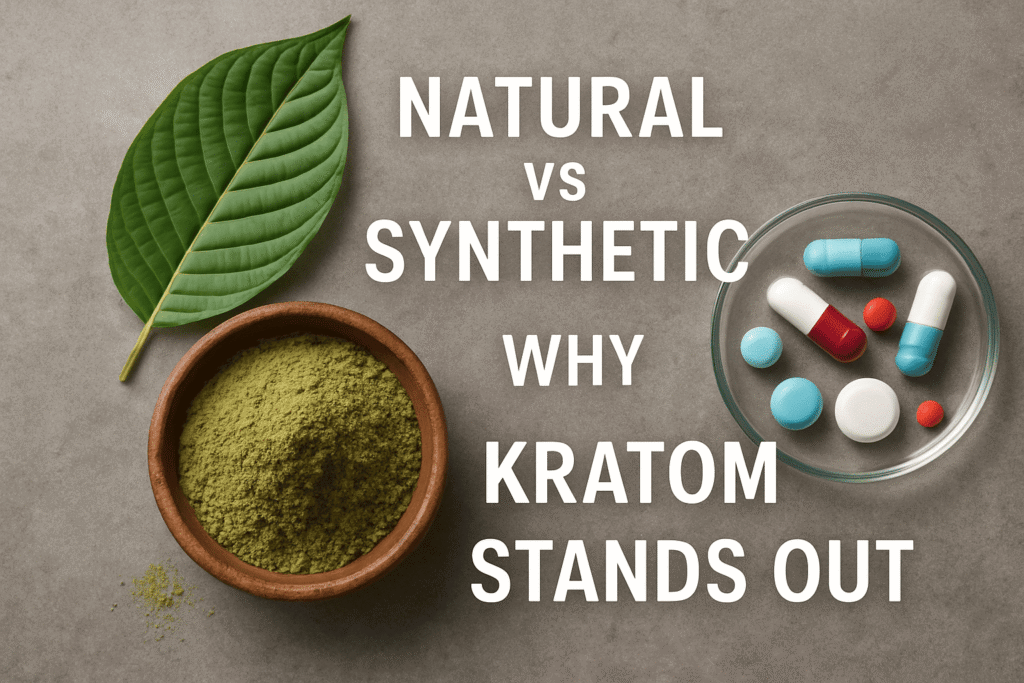
In today’s world of quick fixes and chemically engineered solutions, the divide between natural and synthetic substances has never been more relevant. As consumers become more conscious of what they put in their bodies, the demand for plant-based, natural alternatives continues to grow. One such natural wonder that’s been gaining global attention is kratom — a botanical substance with centuries of traditional use.
But how does kratom compare to synthetic counterparts that claim similar benefits? In this comprehensive guide, we’ll explore the distinctions between natural and synthetic substances and explain why kratom stands out as a powerful, holistic option for wellness seekers.
1. Understanding Natural vs Synthetic Substances
Natural substances are derived from plants, animals, and minerals with minimal processing. They retain the integrity of the source, offering a full spectrum of compounds that work synergistically. Synthetic substances, on the other hand, are chemically manufactured in laboratories and are often designed to mimic or amplify one specific effect.
While synthetic options can deliver fast results, they often come with unwanted side effects or long-term health consequences. Natural substances like kratom offer a more balanced and sustainable approach.
2. What is Kratom? A Natural Alternative
Kratom (Mitragyna speciosa) is a tropical evergreen tree native to Southeast Asia, particularly in Thailand, Indonesia, and Malaysia. For centuries, local communities have used kratom leaves for their energy-boosting, pain-relieving, and mood-enhancing properties.
Today, kratom is gaining popularity in the West as a natural alternative to synthetic opioids, stimulants, and anti-anxiety medications. Its two primary alkaloids — mitragynine and 7-hydroxymitragynine — interact with the body’s opioid receptors without the addictive punch of many synthetic drugs.
3. The Science Behind Kratom’s Alkaloids
Natural kratom contains over 40 alkaloids, but mitragynine and 7-HMG are the most studied. These compounds are responsible for kratom’s effects:
- Mitragynine: Offers stimulating effects in lower doses and acts as an analgesic in higher doses.
- 7-Hydroxymitragynine: A more potent analgesic with mood-enhancing properties.
Because these alkaloids work in synergy with other natural compounds in the plant, users experience a more balanced and sustained effect, unlike synthetic substances that often isolate one active compound.
4. Synthetic Alternatives: The Quick Fix Myth
Synthetic drugs like opioid painkillers, amphetamine-based stimulants, or benzodiazepines may offer rapid relief, but they’re often associated with a high risk of dependence, withdrawal symptoms, and organ toxicity.
Additionally, synthetics are usually tailored to activate only one receptor or pathway in the brain, leading to:
- Quick tolerance buildup
- Greater side effects
- Disrupted natural balance
Kratom’s full-spectrum composition allows it to work harmoniously with the body.
5. Kratom’s Holistic Benefits vs Synthetic Outcomes
Let’s compare the outcomes between kratom and common synthetic options:
| Benefit | Kratom (Natural) | Synthetic Counterparts |
|---|---|---|
| Pain Relief | Gentle, long-lasting | Rapid, high risk of addiction |
| Focus | Mild stimulation | Intense stimulation, crash afterward |
| Mood | Uplifting without euphoria | Artificial highs, possible depression after use |
| Sleep | Promotes calmness | Induces sedation, often groggy |
Kratom not only offers comparable results, but it does so without creating an unnatural dependency loop.
6. Side Effects: Natural vs Synthetic
Even natural products can have side effects, but the severity and long-term consequences are significantly lower with kratom compared to synthetics.
Kratom Side Effects (usually mild and dose-dependent):
- Nausea
- Dry mouth
- Mild constipation
Synthetic Side Effects (often severe):
- Respiratory depression (opioids)
- Heart palpitations (stimulants)
- Memory loss and disorientation (benzodiazepines)
When used responsibly, kratom remains one of the safest plant-based alternatives.
7. Legal and Safety Considerations
While kratom is legal in many parts of the world, it’s important to stay updated on local regulations. Always purchase from reputable vendors that test their products for purity and potency.
We ensure our products meet the highest safety standards. Visit our homepage to learn more.
8. Why Kratom Stands Out
Kratom’s uniqueness lies in its ability to offer multiple benefits — energy, relief, calm, and focus — all from one natural source. Here’s why it continues to stand out:
- Grown and harvested naturally
- No harsh processing or chemical additives
- Adaptable: different strains for different needs
- Proven by centuries of use
In a world flooded with synthetic options, kratom is a refreshing return to nature’s wisdom.
9. Where to Buy High-Quality Kratom
Whether you’re a first-time user or a bulk buyer for distribution, quality matters. At VendorKratom, we offer:
- Premium, lab-tested kratom products
- Fast and reliable global shipping
- Wholesale pricing for businesses
Click here to explore our Kratom offers for personal use and bulk orders
10. Final Thoughts
When choosing between natural and synthetic substances, it’s essential to consider long-term effects, health implications, and overall wellness. Kratom stands out not just because it’s natural, but because it offers balanced, dependable, and safe relief rooted in tradition and supported by modern science.
If you’re ready to experience the natural power of kratom, start here.